The Importance of Institutions (Brief)
The power of institutions illustrated. But what causes institutions? Can we change institutions?
User Contributions (1)
Ask a Question
First of all thanks to professors. These courses are the only free lunch that we can enjoy. My question is why freedom is not included as important factor to economic development?.Winner of the Nobel Prize in Economics Amartya Sen in his book ' development as freedom" gave more explanation about the role of freedom in economic development, how we can include that work in our debates on institutions and economic development?. Your advice.
Thanks! Keep in mind that this is only an introductory video. We cover lots of factors in economic development and further lectures look at rule of law, property rights, corruption/honest government and other components of freedom. We also look at factors such as geography which are prior to freedom but which may impact institutions and have a long-run influence on freedom.
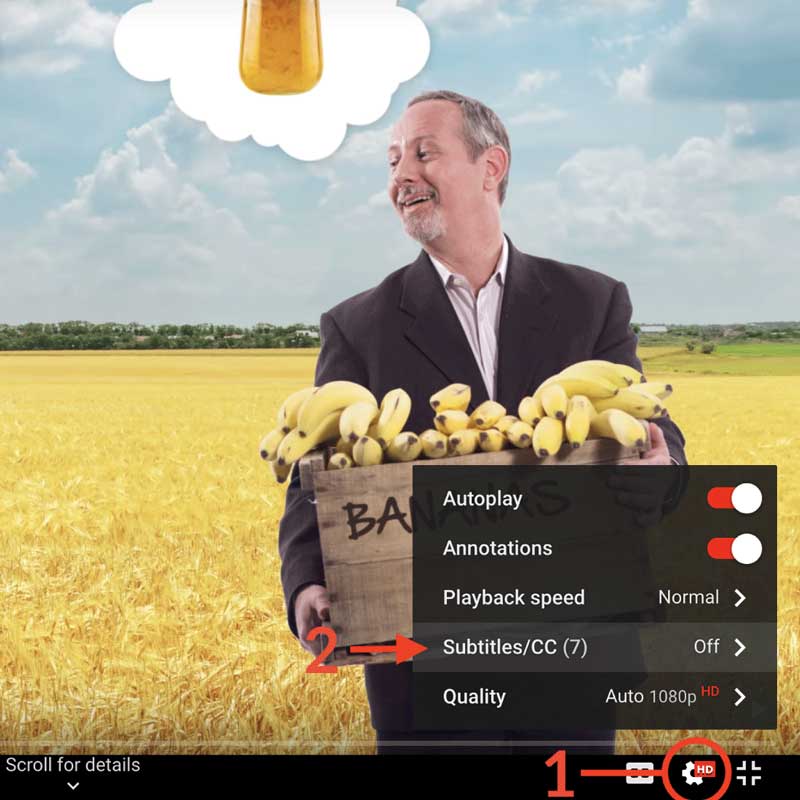
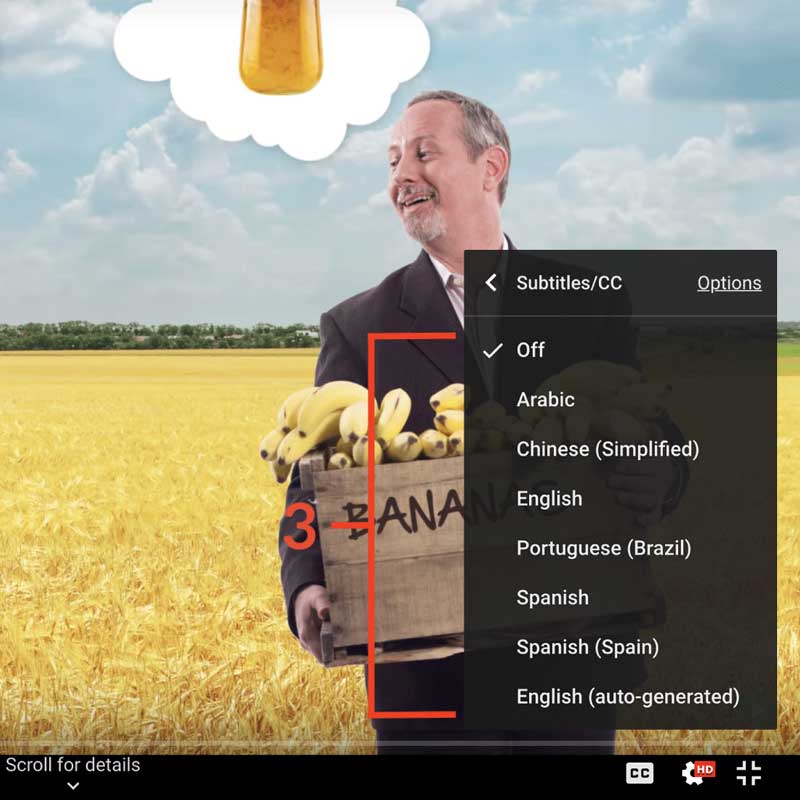
Why are there subtitles on this video when my profile says "not necessary" and I saw no subtitles on the first and third videos in the course? (I ask because I find the subtitles disruptive and strongly prefer to do without.)
You may have turned the captions on accidentally. Move the cursor near the bottom of the video, click CC and then look for turn captions off. Most of the videos have rough (machine translated) English captions. Quite a few have good Spanish translations. In the future we will be looking for help to caption all the videos in many languages. Whether you see the captions, however, is entirely under viewer control and not controlled at all by your profile which is just used to gather information.
It's a youtube thing, not a MRU thing. Unless Tyler and Alex decide to switch video streaming sources, you'll have to deal with the youtube closed captioning system. I suggest seeing whether you have a preference set in your google account (if you have a google account), since that would be the controlling factor. Also, if you are sometimes logged into your google account, and sometimes not, then that would impact it as well.
Why culture is not considered an institution? I would consider culture an institution itself which can further shape the development of other institutions.
I find this an interesting question. I know there are many definitions of institutions, and I would also be interested to hear which one is being used for this course. Sorry I don't have any answers though!
The definition of "culture" is often a function of the specific social domain, eg. one can argue about the characterization of national culture, regional culture, organizational culture, corporate culture, etc. The meaning of "culture" cannot be defined as precisely as the meaning of "institution". In very broad terms, an institution can be defined by a set of rules formally and mutually agreed among the members of a community.
Having said that, I agree 100% with the notion that culture (in its various declinations) can and indeed does contribute to the choice of development path of a community. The thing is that culture, in contrast to institutions, cannot be managed by the community as easily as institutions can.
Out of curiosity I googled the town in the photo, Nogales, and found this article by Paul Theoroux about a recent visit to the Mexican side of the border - its an interesting article with some good information about the economics of the town.
http://www.nytimes.com/2012/02/26/travel/nogales-mexico-a-few-steps-and-...
What is the purpose of that particular picture of Nogales? It doesn't support the dubious points made in the video. The infrastructure on both sides is the same, the police are casually ignoring official rules by parking on the sidewalk on the North side, the North is dominated by nasty modern architecture block government and institutional buildings while the South has attractive traditional architecture. There is more commerce and more motor vehicle presence on the South side with more orderly traffic and pretty homes with views on the hillside.
I absolutely agree. Modernization and bureaucratization do not necessarily imply improvement in quality of life.
This often the case along the border as those on the impoverished side seeking opportunity will congregate or immigrate where opportunity is greatest. Entry points to US/Mexico are main thoroughfares with huge potential to grab US dollars. Could you be more ridiculous by noting the federal agent parking the federal law enforcement vehicle slightly on sidewalk? I agree with Debra Cornelius that bureaucratization does not equate to improvement in quality of life.
I thought the same - that picture could be better. It does not reinforce the points made through the statistics that the reader presents
Yet the points you make are not necessarily evidence of the well being of the general population in the two areas. In fact, mansions tend to be evidence of disparities in income, not general welfare.
If you travel to Nogales (Az and Sonora), and if you talk to people about living in the two cities, you will quickly come to be convinced that the basic point of the video is absolutely correct. Unless corruption, uncertainty and general chaos are your personal cup of tea, Nogales, AZ is, by far, the more attractive community in which to live. The persuasiveness of the photo as evidence is, I suppose open to interpretation.
Is there a more objective measure of the reliability of institutions other than surveys of public perception of reliability? I ask this because is seems plausible to me that part of the reason democratic republics are more stable than autocratic republics, which in turn are more stable than dictatorships, is the fact that policies just can't change that quickly. I'm a newbie at economics, any research or help would be greatly appreciated.
I wonder if North Korea's situation is exaggerated by the, shall we say, idiosyncratic personality of its longtime dictator Kim Il-Sung. Given the widespread bread lines in the old Soviet Union, I'm sure North Korea would still be behind South Korea, but without a ruler who only cares about his handpicked sycophants gathered in the national capital, there would probably be a few more cities lit up at night.
If you want another example, compare West and East Germany before 1989. East Germany was not extremely poor (it was one of the most well-off of the Warsaw Pact countries), and it had leadership that recognized that consumer goods and the welfare of the populace were important. However, it was still far poorer than West Germany, and a lot of that - not all of it*, but a lot of it - was because of the diversion in institutions after 1945.
* Some of it goes back further. Westphalia and the Rhine and Rhone River Valleys were always more commercially prosperous than eastern Germany.
It's worth noting that North Korea was originally ahead of South Korea in the '40s and '50s: they had Soviet aid, and were successfuly industrializing and growing (much like the original Soviet 'economic miracle' where it jumped from falling-apart Czarist Russia to, well, a superpower).
Kevin, I see what you are saying, but I think there is a reasonable definition of "institutions" that might include the fact that sometimes the personality type of the totalitarian ruler is .... idiosyncratic. It seems reasonable to assume that even a staunch defender of totalitarian institutions would acknowledge the importance of choosing the right rulers and the potential for wrong choices as a major downside to that governing arrangement.
Kevin,
Another aspect of the research, specifically Acemoglu and Robinson, is that much of what you consider idiosyncratic behavior isn't. In order to maintain despotic control in the modern era, one has to both hobble mass society and aggrandize central power. The institutions that are in place serve to extract wealth from the general population, if there is way to do well for oneself without joining the oppressive class, one won't be beholden to the ruling class. So when marginal degrees of liberation take place the risk is that individuals will see the system for what it is, and that system will become unsustainable very quickly. Once the genie is out of the bottle_ the traditional ruling class can only maintain control through violence or by temporarily placating the masses with brighter economic prospects or further amounts of political freedom. The Arab Spring and its many sprouts provide excellent examples of each of these scenarios. In Egypt, you saw violence initially and then the gradual erosion of power, as new demands from the population were made and met. Oman, Jordan, Saudi Arabia, and a few of the more stable gulf states generally took the route of providing greater economic benefits to the population, In Syria and Libya, the government fully committed to military solutions. Don't get me wrong, I know each of these countries have very different economic and political institutions, but none of these countries at the time could be considered democratic, and all of them contain/ed extractive institutions.
Hello, your practice questions here seem to want us to say that Institutional differences are possibly explained by History and Geography. Yet the whole short analysis of this video focussed on 2 parts of the world (Nth and Sth Korea, USA and Mexico) that have essentially the same geography but have different histories, and that the border separating the two shows how little geography plays a part and how much history does.
The third video under the Geography and Development video says there is a link between Geography and institutional capabilities. But that is something they are delving into later.
While it is true that geography does not play a significant role in those particular cases, this fact does not imply that geography is irrelevant more generally. The two examples serve to abstract away from geographical and cultural differences.
I agree with you Thomas. Were you embarrassed, as I was, by getting that quiz question wrong? Regardless of Kaushik and Nathaniel's points, the quiz should reflect what has just been shown or taught, and there's nothing in that particular lesson to make us think geography matters, and plenty to make us think it doesn't.
Point well taken.
In terms of vital statistics of an economy - i.e GDP, GNP, Trade etc. South Korea and USA maybe doing better than DPRK and Mexico, but what are the tradeoffs a country would have to face, for achieving a lively economic growth ?
It's true that institutions make a massive difference in the development of economies. Could you provide examples that aren't quite so tied to American propaganda? The descriptions regarding North and South Korea "choosing" communism and capitialism, respectively, are woefully simplistic. As someone interested in studying comparative economic policies that run the gamut, it concerns me that both examples scream "American capitalism is the best" when there are countless other examples of both American-style institutional failures and other styles' institutional successes.
I have a feeling that you would have to get rid of the notion of GDP in order to do that. For example, GDP per capita doesn't account for disparities in income. I'd like to see mean and variance of GDP although I doubt there is such a thing. GDP also doesn't account for the general welfare of the population, such as access to universal health care, which is much better in European countries, and worse in the USA. One could measure the percentage of the population that has access to a certain standard of health care, for example. The basic measures seem to reflect cultural bias, and that is difficult to fix. The UN does quantifiably measure general welfare and the US does not rank quite as highly by those measures. It might be argued that the points made in these lectures stand regardless of these quibbles (guessing).
Just a couple of verbal typos in the Arizona/Mexico video... Maybe the little graphic indicating "higher income" should be on the right, not the left, and the audio several times does the same thing -- claiming all the good stuff on the "left".
The left is the U.S. not a typo.
Hello. First of all, as it is my first answer, I would like to say thanks for the courses.
Going to the point. I understand the importance of institutions, but i think that it's more important that politicians respect institutions and work for the people. Do you think that the non respect of institutions it's a general problem ?
Very simplistic world view where "communism" leads to "bad things" and "capitalism" to "good things". It will be interesting to follow if you will put special emphasis on how the South Korean government set up the rules for the expansion of the market in South Korea. Their success was not a free market success, far from it.
It is also interesting how you see greater consumerism as something good, or that having an economy which produces so much light as seen from the space is something implicitly good, not counting light pollution. An economistic and materialistic view on things is, for me, a flawed and incomplete way of looking at the state of the world.
The problem to include "ethical" argument in economic issues is that there are as many ethics as human beings and discussions turn circular and eternal. I think that development economy refers to improve the material wellbeing of people. with as minimal of personal values as possible. A good economy is those where people is richer in material goods and vice versa. I am not meaning that values are not important, but they are personal, as religion, political preferences and so on so there are no room for an nearly objective approach to those issues. In terms of economic development South Korea is more successful than North Korea and I guess that if someone disagree, is perfect but he is not talking about economy or development but on political preferences, which is not the topic.
The experience of south Korea indicates the effective role that the government can play in promoting economic prosperity and growth. South korea efficiently utilized the principles of specialization and division of labour.The opening up of the Korean market to international corporations was a key element in gaining new technology, experince and know -How.
It is the market econnomy that led to economic mircles in South Korea. This kinds of economies referred to as mixed economies.Nobel laureates in economics Joseph Stiglitz in his book ( globalization and its discontents ) gives more explanations on these issues.This is my own opinion.


I had the same issue as John, and I know I certainly didn't click on anything before the video started. Are captions then automatically turned on, and I will have to turn them off each time?